Tour overview the Lechweg (Lech Trail)
Arrival in Lech am Arlberg
Arrival by Train
Should you arrive by train, travel to the station in Langen am Arlberg. From there, take bus line 750 to Lech. A ticket machine for the bus journey is located in the station building. In Lech am Arlberg, get off at the "Rüfiplatz" bus stop. The bus runs hourly, and the journey takes approx. 23 minutes. From there, it is approximately a 500-meter walk to the hotel entrance, depending on your specific hotel location.
Arrival by Car
If you would like to arrive with your own vehicle, there are two options. Either you park the vehicle in Lech am Arlberg directly at the hotel, or you park the vehicle in Füssen and can thus drive home comfortably the next day after your hike. If you plan to travel directly to your hotel in Lech am Arlberg and want to park your vehicle there, we kindly ask for prior arrangement. In both cases, you travel with bus lines 100 and 110 from Füssen to Lech or vice versa. The journey takes about 3 hours depending on the time of day. You have to change buses in Reutte, and you should check in advance what the optimal travel time is so that the transfer time in Reutte can be kept short. Bus line 110 runs only as far as the "Schlosskopf" bus stop at most. From there, you can take local buses 701, 704, or 709 for the additional 700 meters to the Rüfiplatz.
Once You've Arrived in Lech am Arlberg
Bring your luggage to the hotel and check in. Depending on the time of day or arrival time, you will receive the "Lech Card" guest card. Afterwards, head to the Rüfikopf cable car (Rüfikopfbahn) and explore the panoramic Rüfikopf mountain. The cable car runs every 30 minutes, on the hour and half-hour, in summer until 5:30 PM, and in the summer months of July & August until 9:30 PM every Friday. Once you reach the top at 2,350 meters above sea level, there are many beautiful ways to start your break on the Lechweg. Whether you enjoy the view on the panorama platform, take your first short mountain hike, or simply feast on a Kaiserschmarrn (shredded pancake dessert) at the Rüfikopf Panorama Restaurant. In the evening, a visit to the restaurant Hus Nr 8 is definitely worthwhile (please reserve a table in advance).
Hotel (example): Hotel Lärchenhof
From Lake Formarin (Formarinsee) to Lech am Arlberg
The hike from Lake Formarin to Lech is one of the most beautiful stages of the Lechweg and leads through an impressive alpine landscape where water, rock, and wide open spaces harmonize in a special way.
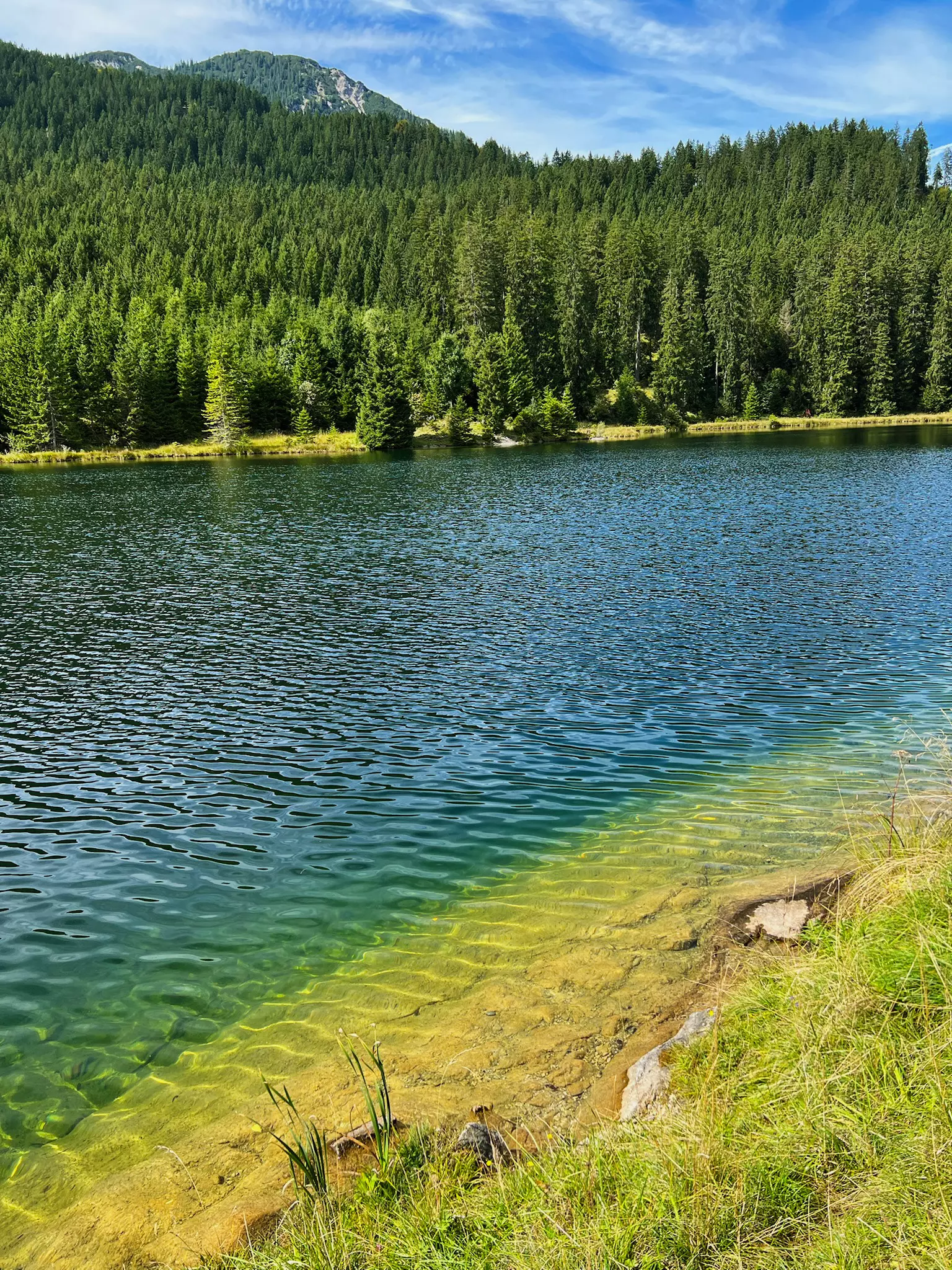
You can conveniently reach the Formarinsee terminus at 1,793 meters from the Rüfiplatz in Lech using the hiking bus line 707, for example around 8:22 AM, 9:25 AM, or later. The trip usually costs €25 per person but is included with the Lech Card. At the top, at the start of the Lechweg, an impressive nature experience awaits you. A short detour up the service path to the lake is worthwhile and mandatory. The turquoise-blue shimmering Lake Formarin lies peacefully embedded between the rugged peaks of the Lechtal Alps. A panorama that invites you to pause and enjoy.
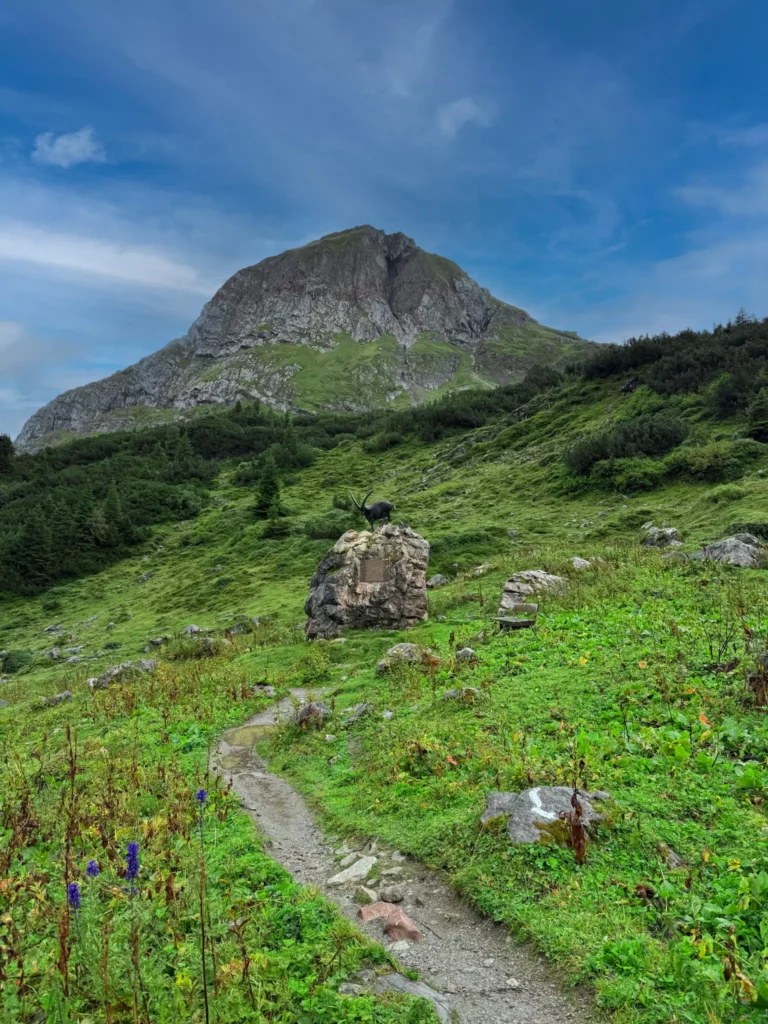
After a short rest, return to the bus stop and follow the path toward Alpe Formarin. There, a meadow path branches off to the right and leads past the ibex monument, which commemorates the successful reintroduction of ibex since 1958. With a little luck, you might observe one of Europe's largest ibex colonies here.
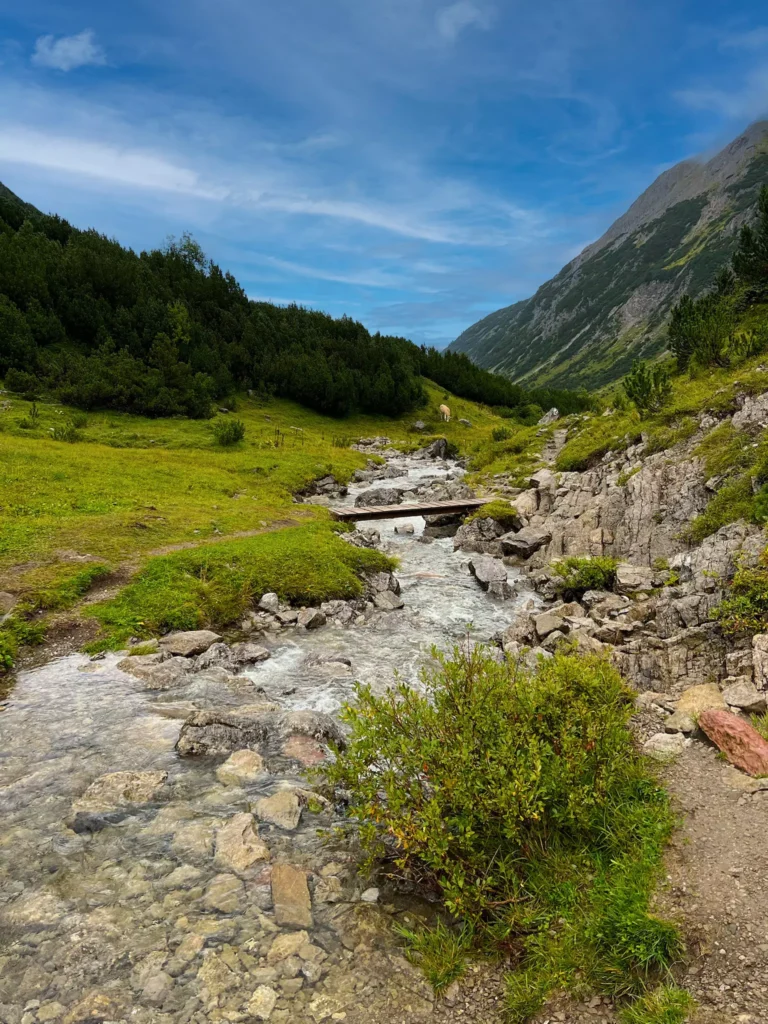
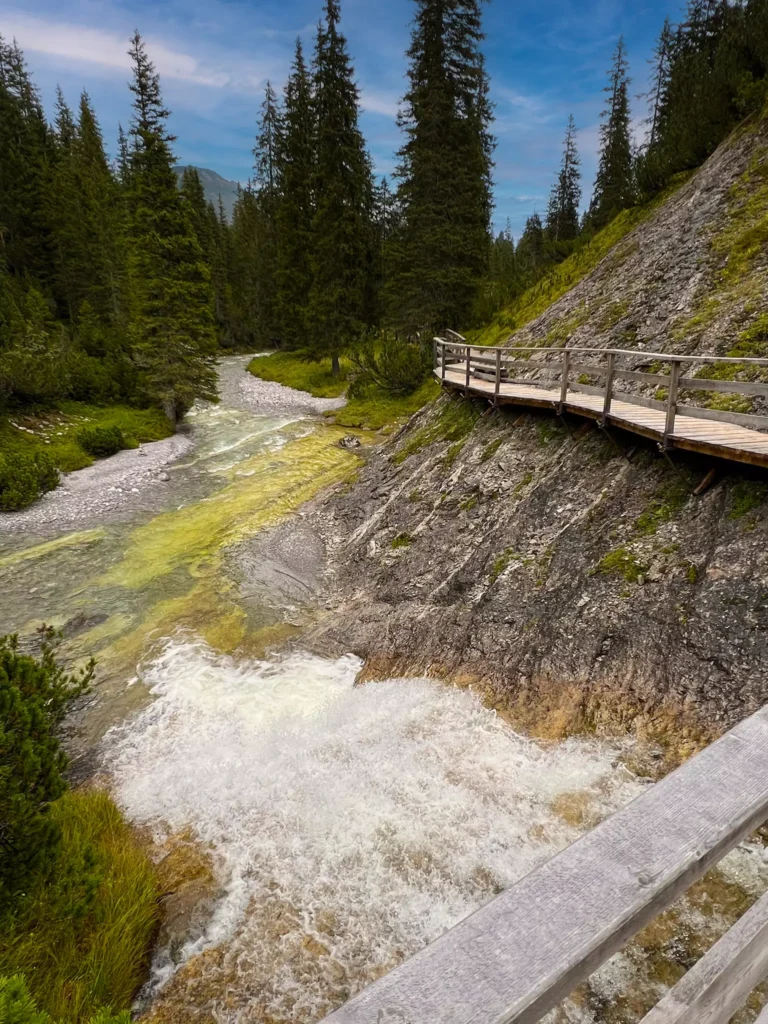
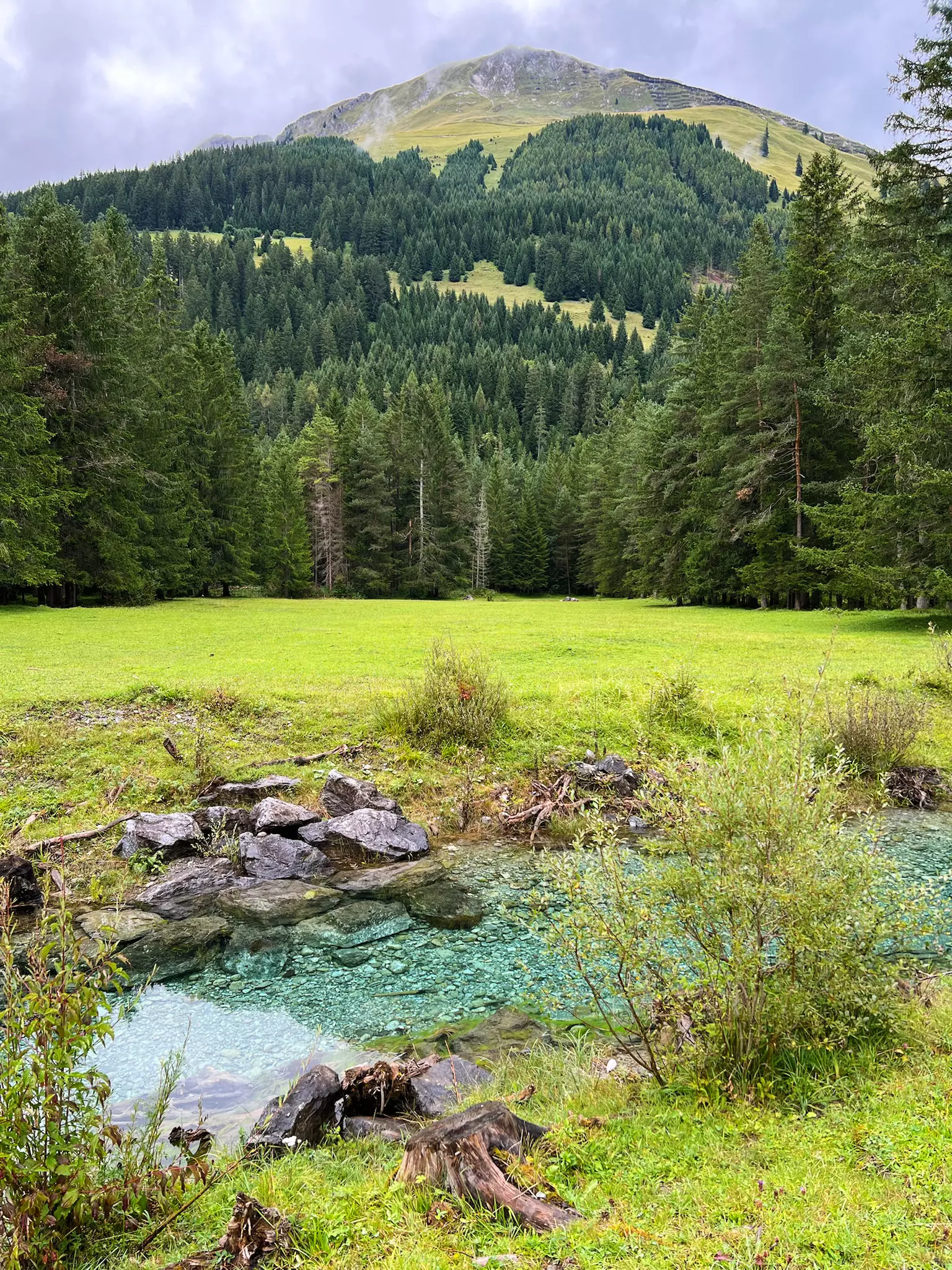
In spring, after the snow melts, numerous springs in the Lech source area bubble up right next to the path. The gentle murmur of the water accompanies you through wide alpine meadows, past ancient limestone blocks marked by the weather, silent witnesses of times gone by. Soon, the Formarinbach stream joins your hike. It unites with the Spullerbach stream, and here the young Lech river is formed, accompanying you downstream from then on. The path continues over wooden footbridges and small bridges, while the clear mountain water rushes and glistens beside you.
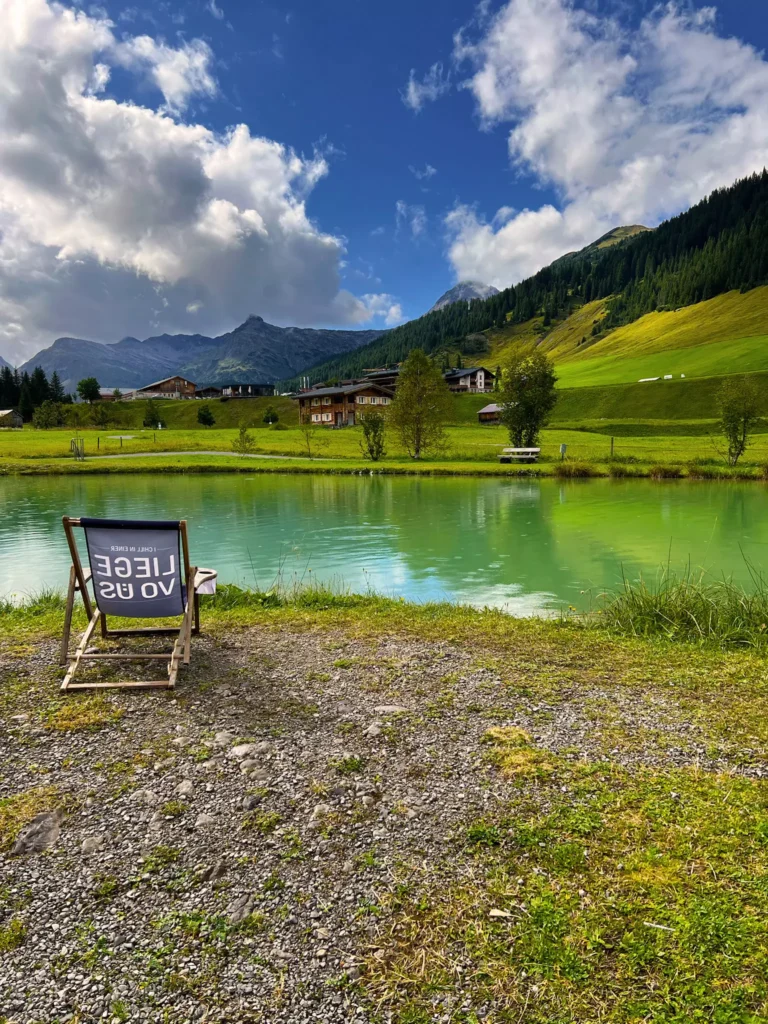
Passing the idyllically situated Älpele, you reach the district of Zug, where a cozy stop at the fish pond is a good option. The Restaurant Fischerwirt offers fresh grilled fish, included. After the short break, use your Lech Card to take the Zugbergbahn cable car up to the Balmalp at 2,100 meters and marvel at the panoramic view. After the relaxed descent, follow the Lech riverside path via the Tannberg section to Lech am Arlberg, which is picturesquely situated amidst green meadows and surrounded by imposing peaks. On the way, you can utilize the Lech Card again and cool off briefly in the forest swimming pool (Waldschwimmbad) . Be sure to pack a small towel and swimwear in your hand luggage.
The approx. 14-kilometer route (about 5 hours of pure walking time) offers an impressive nature experience and a harmonious connection of alpine tranquility, clear mountain air, and the fascinating history of the young Lech, which begins its journey into the wide world here.
Hotel (example): Hotel Lärchenhof
distance
climb
descent
duration
From Lech am Arlberg to Lechleiten (Warth)
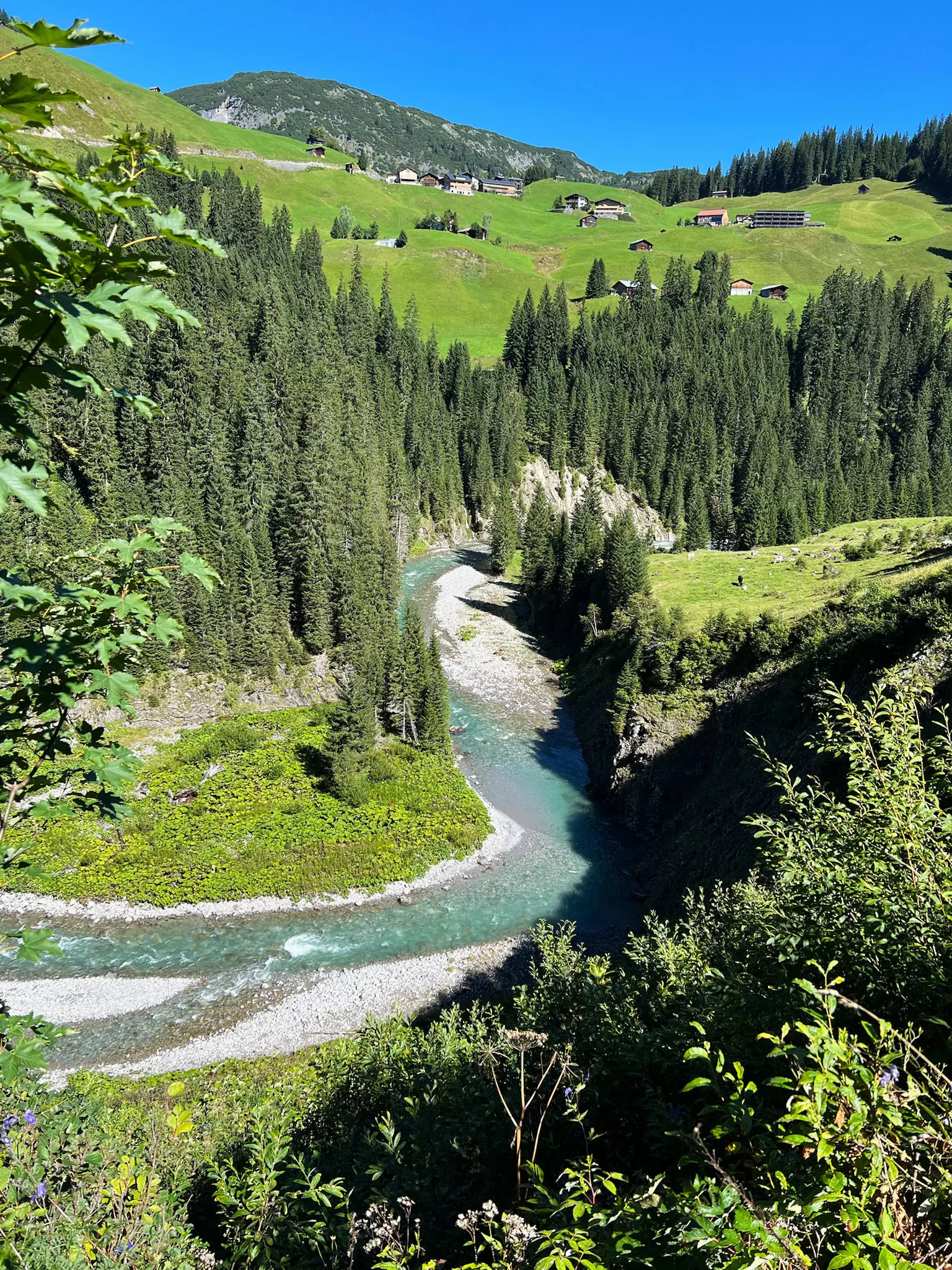
This stage of the Lechweg leads you from Lech am Arlberg to Lechleiten, a picturesque district above Warth. The route runs for the most part above the Lech gorge and offers impressive views of the young river, which winds its way deep down through the valley.
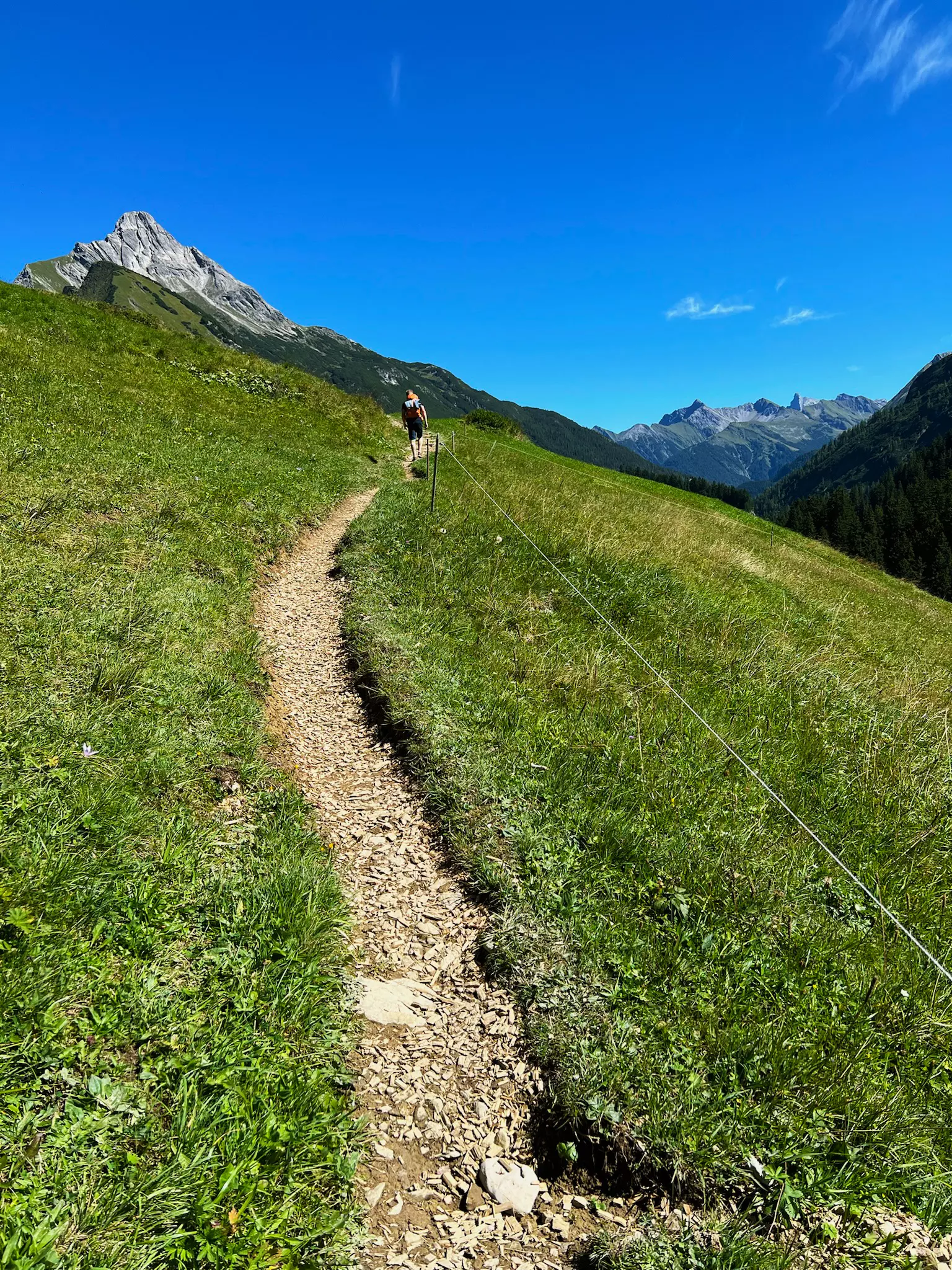
From the town center of Lech, the trail first leads through the hamlet of Stubenbach. Beautiful panoramic views of the Lech Valley and the surrounding peaks open up again and again here. You continue hiking along narrow paths and forest tracks towards Grenztobel, the natural border between the municipalities of Lech and Warth. Along the way, you cross several small mountain streams that glitter as they make their way down into the valley over stones and roots.
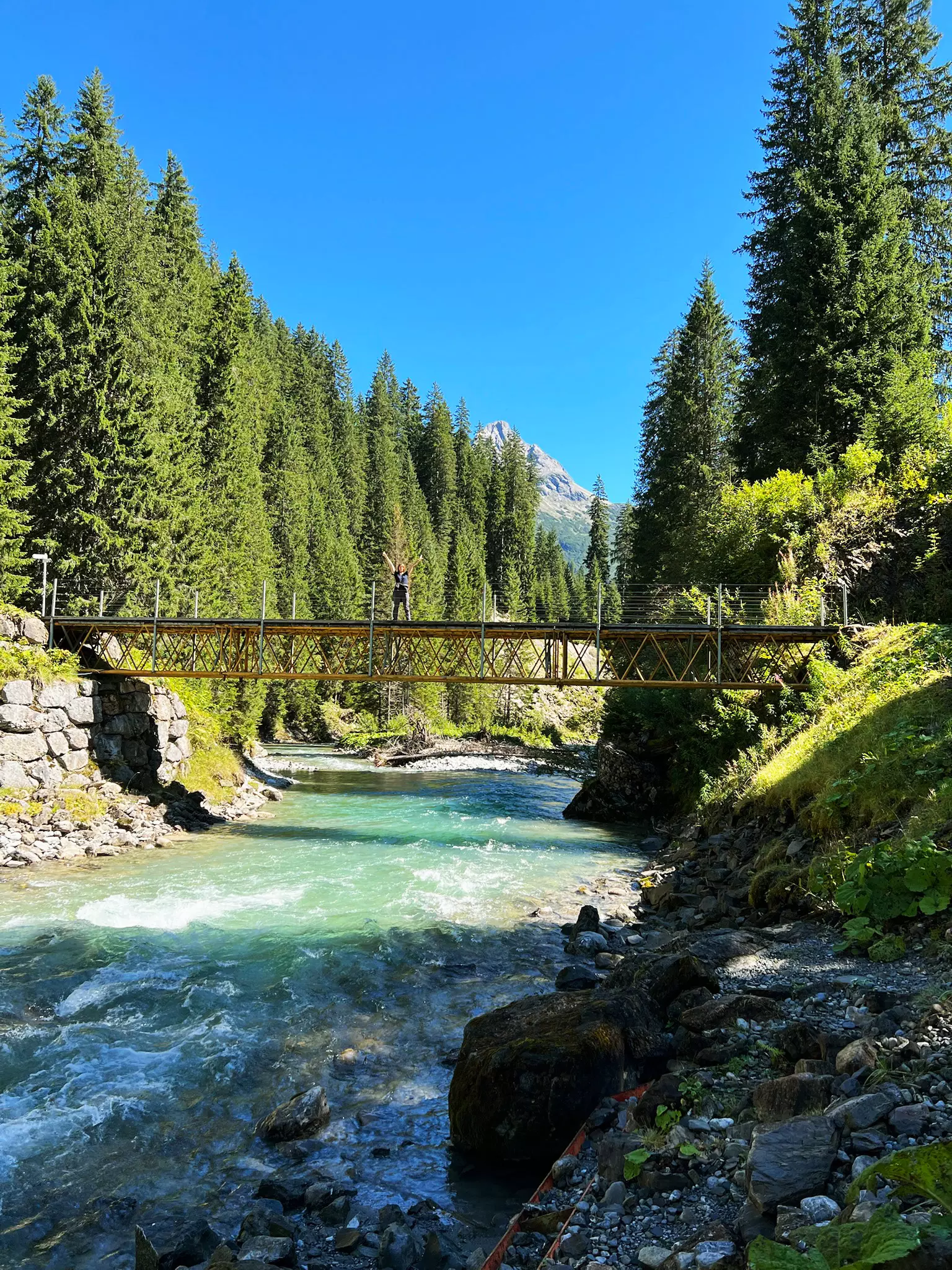
A short detour to the Bodenalpe is especially worthwhile for a rest amidst the pristine mountain landscape. Otherwise, the trail follows a forest track that runs high above the Lech until you reach a wooden bridge. Secured with steel cables, this bridge crosses the river, which appears particularly wild and powerful here.
The path then climbs gently and leads uphill through the fragrant high-altitude forest towards Warth at around 1,500 meters. At the entrance to the village, you are greeted by the idyllic Seebachsee lake, whose clear surface of water harmoniously blends into the landscape. Right next to it, Vorarlberg's highest alpine dairy and butcher shop, the "Wälder Metzge," invites you to a delicious break with regional specialties.
In the village center of Warth, the Walserhus and the Church of St. Sebastian bear witness to the rich craftsmanship and history of the Walser people, who have shaped this region for centuries. From here, the Lechweg continues to Lechleiten, where the view opens up wide over the upper Lech Valley and the Allgäu Alps—a fitting conclusion to this varied stage.
The route from Lech to Lechleiten is about 15 kilometers long and can be comfortably completed in around 4 to 5 hours. It offers an impressive combination of mountain forest, gorge landscapes, and cultural insights into the life of the Walser villages in the Arlberg region.
Hotel (example): Berggasthaus Alpenrose
distance
climb
descent
duration
From Lechleiten (Warth) to Holzgau
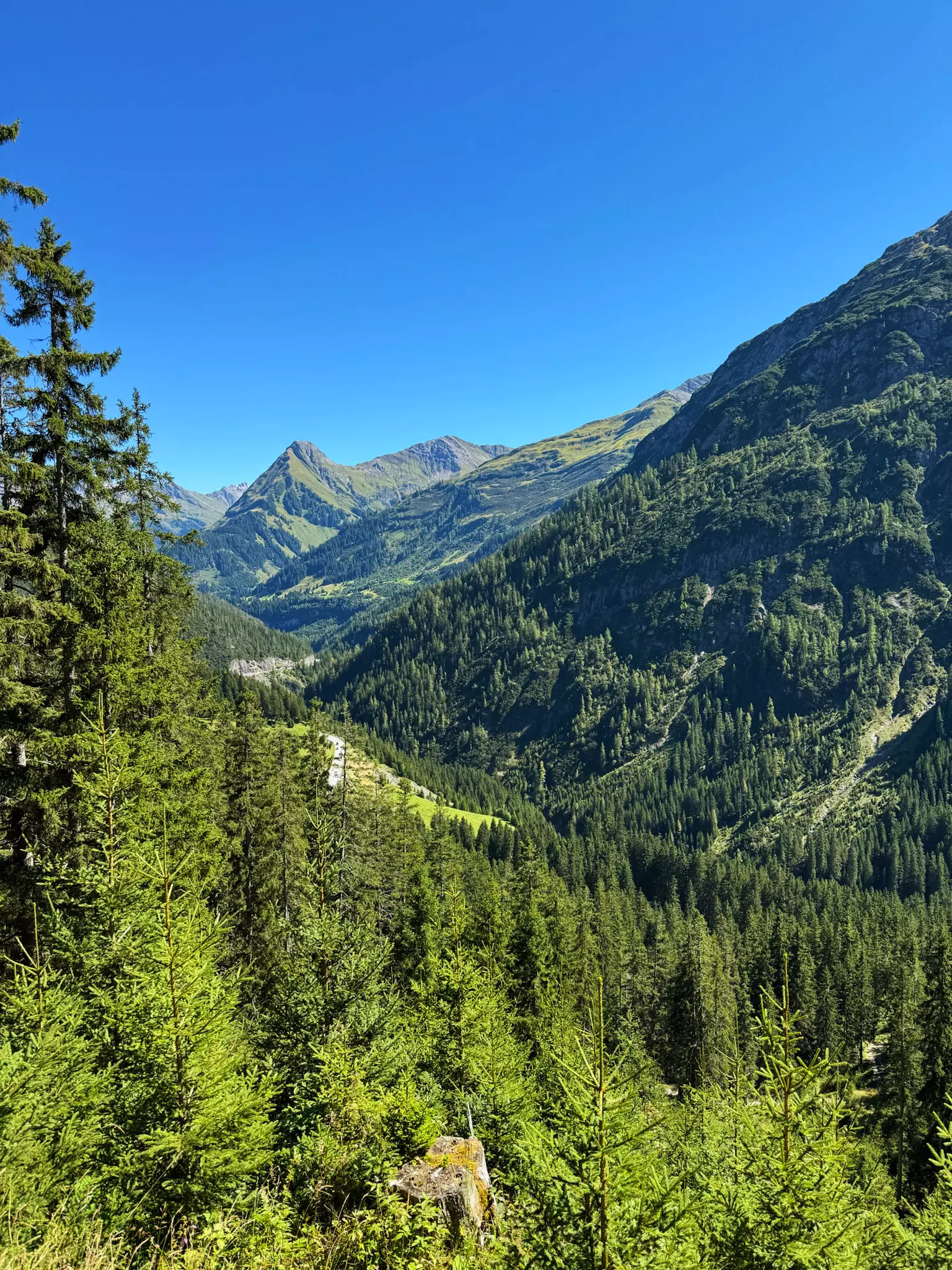
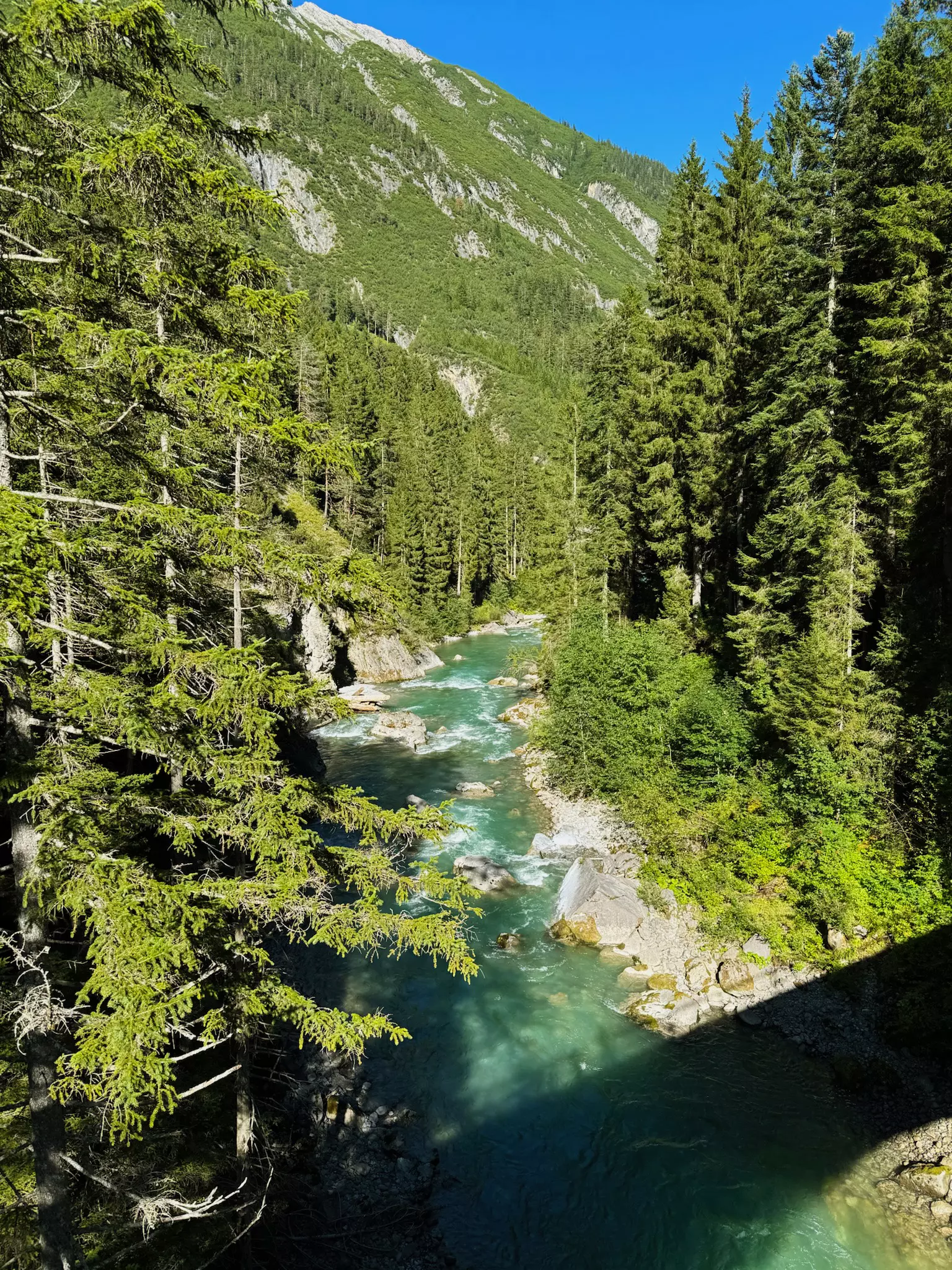
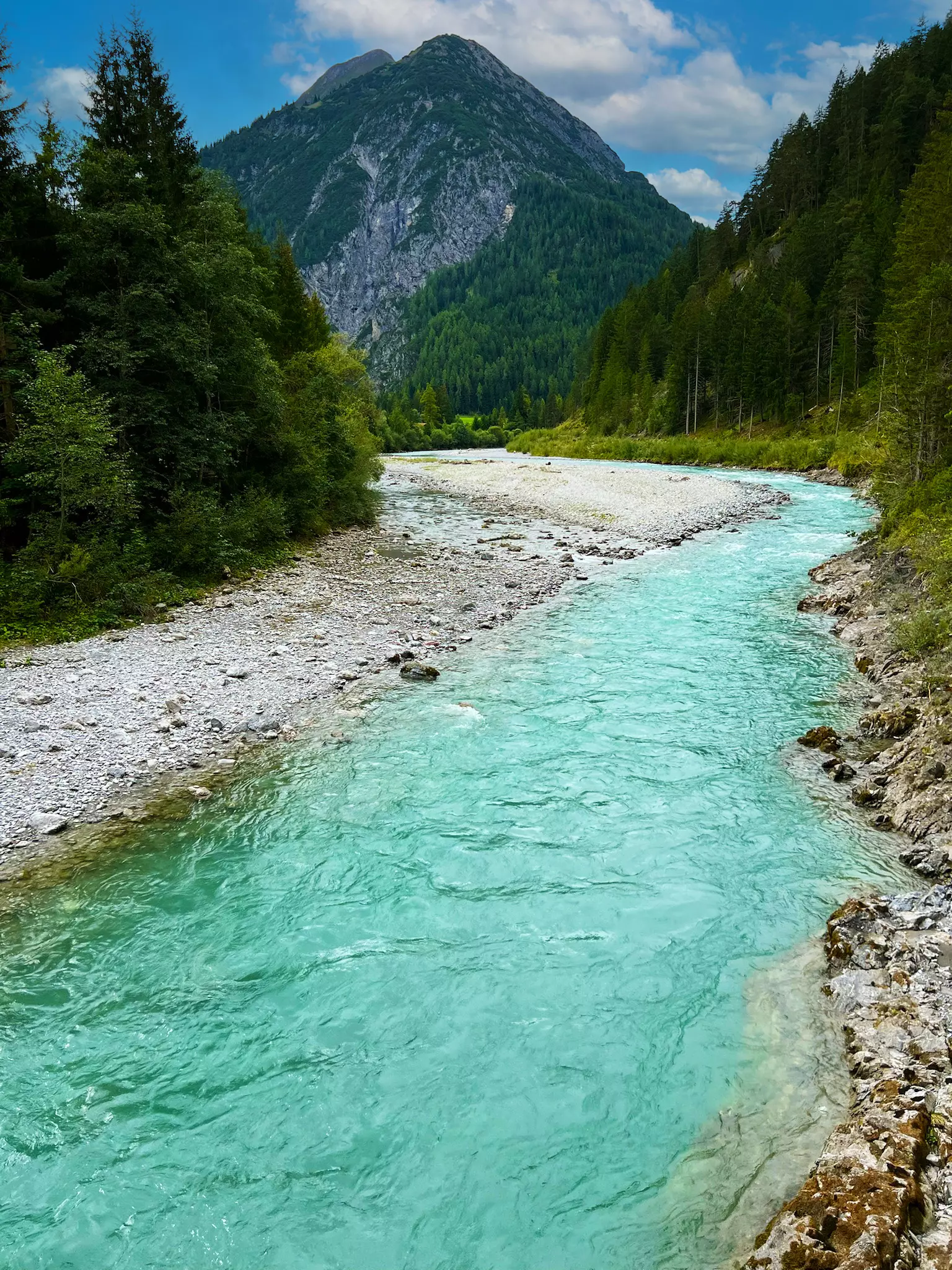
You leave the original Walser villages behind and follow the Lechweg from Lechleiten via Steeg to Holzgau, through varied landscapes and along the turquoise-blue Lech river, which has already significantly shaped its valley here. You are now on Tyrolean soil and have a wonderful view of the Lech Valley. The panoramic trail leads high above the valley in the direction of Steeg, and deep below, the magical turquoise of the Lech repeatedly flashes between trees and rocks.
The path winds its way gently downhill in switchbacks on the former federal road. It is hard to believe that all transit traffic ran along here until the early 1980s. Today, nature is reclaiming this quiet section bit by bit. Once you reach the bottom, follow the path along the banks of the Lech river into the village of Steeg. A well-deserved break at the Sojer natural cheese dairy , where delicious regional products are made, is a great option here. If you want to treat your muscles, you can relax in the Aqua Nova adventure pool.
From Steeg, the Lechweg continues along a country lane towards Hägerau. At the wild and romantic waterfall, a small Kneipp facility invites you to paddle and linger, offering refreshing enjoyment on warm days.
Finally, you hike further along the Jochweg trail to Holzgau, a village that delights visitors with its artistically painted facades. The "Lüftlmalerei" (fresco paintings) from the late Baroque period adorn many of the old houses, telling stories from times gone by: of patron saints, craftsmanship, everyday farming life, and hunting scenes. They lend the village a special atmosphere and make Holzgau a cultural highlight of the Lechweg.
The stage from Lechleiten to Holzgau is around 17 kilometers long and can be comfortably managed in approximately 5 hours of walking time. It combines impressive nature, Tyrolean tradition, and vibrant history. A varied section of the trail for anyone who wants to experience the Lech in all its facets.
Hotel (example): Posthotel Lechtal

distance
climb
descent
duration
From Holzgau to Elbigenalp
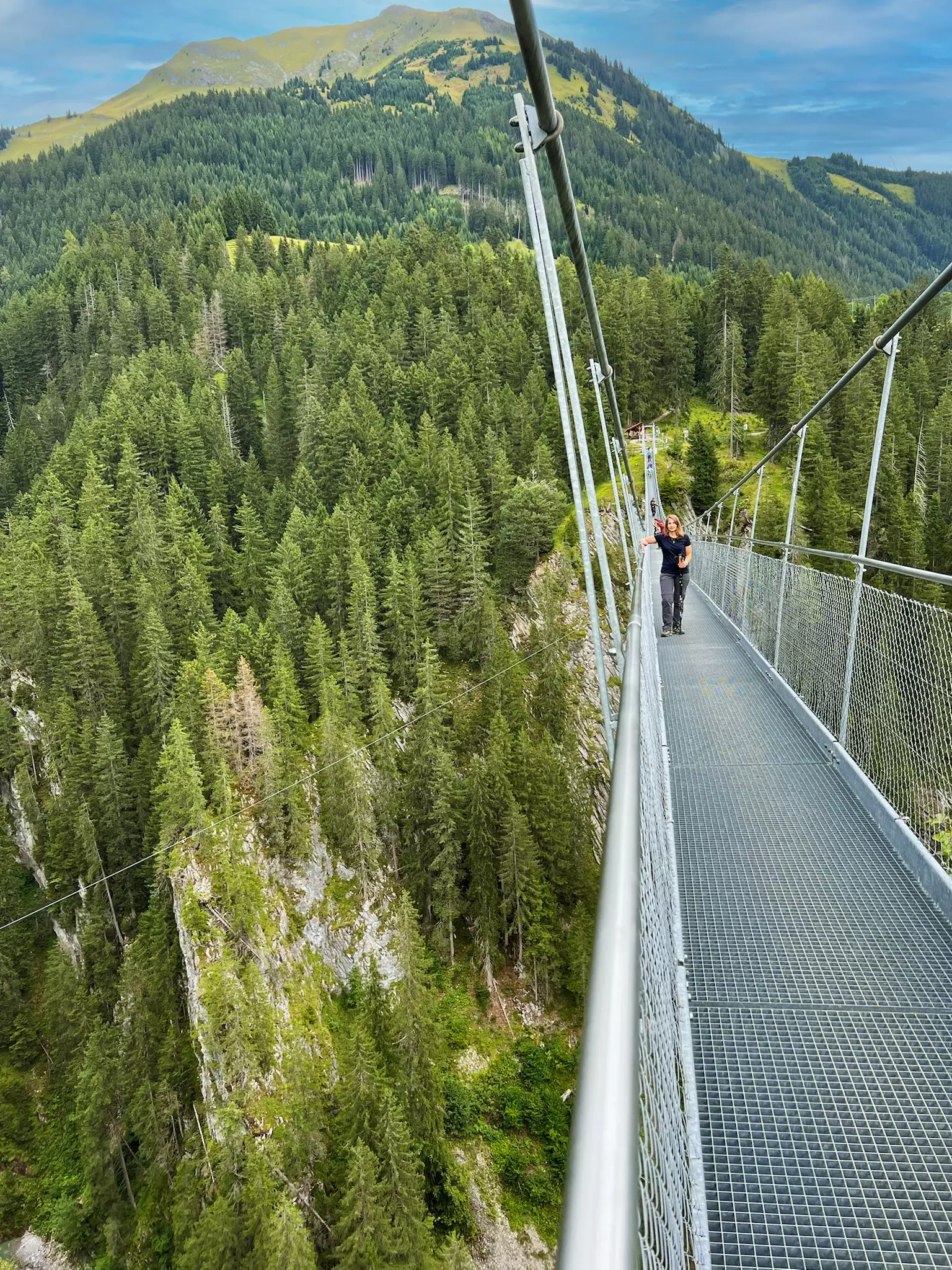
Right at the start, one of the region's most famous structures beckons: the imposing Holzgau suspension bridge. With a length of around 200.5 meters and a height of 110 meters, it spans the impressive Höhenbach gorge—a highlight for those who are good with heights. The original Lechweg trail does not cross the bridge but leads through the wild and romantic Höhenbach Valley. On the way back, you automatically reach the bridge, and anyone who wishes can cross the bridge and dare a look into the depths. A payment of €2 per person is requested for the use of the bridge. This serves to maintain the structure and can be deposited in cash into the payment pillar at the bridge entrance. A small contribution that makes a big difference.
Those who stick to the original route hike comfortably into the Höhenbach Valley, past the Simms Waterfall to Café Uta, which invites you for a short rest. From there, a hiking trail leads up to the "Schigge," a small landscape jewel with wooden footbridges where you continue through the untouched nature towards Stockach.
From Stockach, the path runs via a trail up into the Benglerwald forest. Shortly before the edge of the forest, the Lechweg branches off to the valley station of the Jöchelspitzbahn cable car. The cable car ride is included in the Lechtal Aktiv Card guest card and is free of charge. Near the mountain station is the Lachenkopf summit cross and the Lechtaler Bergheumuseum(mountain hay museum), which impressively documents the arduous work and simple life of the Tyrolean mountain farmers. On the section from the Benglerwald to the Seesumpf (lake swamp), a short detour to the Modertal Waterfall is recommended, which plunges roaring into the depths in a narrow rock gorge. A mysterious place around which many legends are entwined.
At the Seesumpf, the path leads back into the forest on the right-hand side. After a short walk, you reach a small chapel before the path leads down to Bach. From Bach to Elbigenalp, the Lechweg follows the riverbank on a pleasant, level hiking trail. This last section runs for about three kilometers in the immediate vicinity of the Lech river, accompanied by the sound of the water and the view of the surrounding mountains. To get to the center of Elbigenalp, you leave the main path and follow the signposted access route into the village.
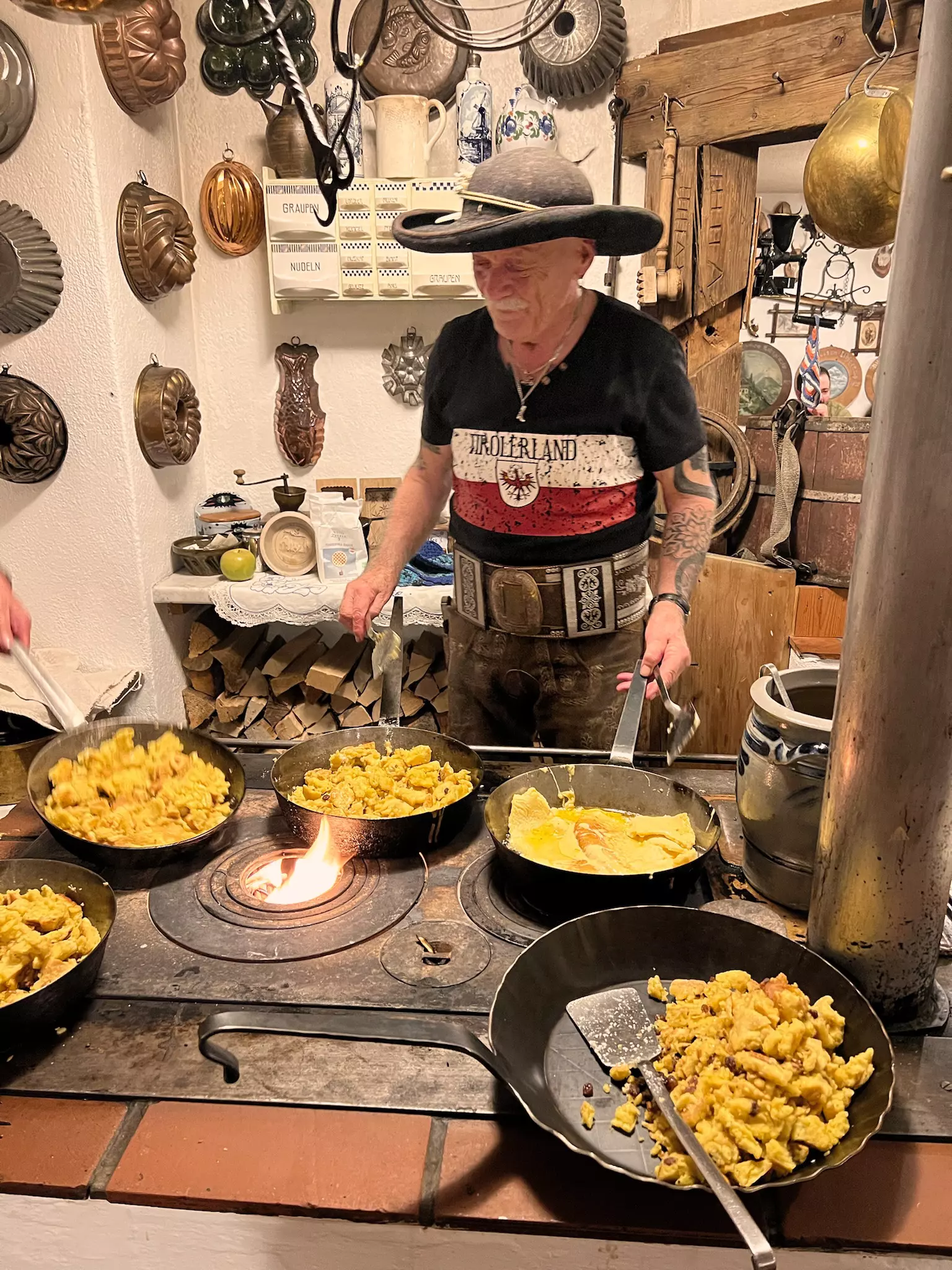
After arriving in Elbigenalp, the cultural heart of the Lech Valley, an evening visit to the Restaurant zur Geierwallyis recommended. The cozy house is named after the legendary "Geierwally," a woman from the Lech Valley whose life story became known far beyond the borders of Tyrol through novels and theatre. In a traditional atmosphere, you can enjoy regional specialties here, lovingly prepared from fresh ingredients from the Lech Valley. A special experience is offered on Monday evenings with the popular "Cooking on the Open Hearth." In the rustic inn parlor, there is a large wood-burning stove, surrounded by old pans and kitchen utensils. With great enthusiasm, humor, and passion, the team guides guests through a multi-course menu. An evening full of enjoyment, stories, and charm. You also learn interesting facts about the Lech Valley dialect and the culinary traditions of the region—genuine experience gastronomy that can only be found here.
As seating is limited, reservations in advance are recommended. This is how you can end your hiking day on the Lechweg in Elbigenalp with a special culinary highlight.
The stage from Holzgau to Elbigenalp is around 16 kilometers long and can be comfortably managed in approximately 5 to 6 hours of walking time. It combines impressive nature experiences, cultural insights, and quiet moments by the water. One of the most versatile sections of the Lechweg.
Hotel (example): Hotel Stern
distance
climb
descent
duration
From Elbigenalp to Elmen
From Elbigenalp, the access route first leads you back down to the Lech river, where you rejoin the main trail. You hike comfortably out of the valley along the turquoise-blue wild river and cross a bridge on the right that takes you to Grießau. Here, you follow a path that runs through meadows and small riverside forests and finally leads into a country lane. The path continues constantly along the Lech, past gravel banks where waterfowl can often be observed, all the way to the Häselgehr outdoor swimming pool. A small special feature here is the artificially created stream with sulphurous water that flows through the facility, providing a pleasant refreshment on warm summer days. With the guest card, it costs only €1 per person/day.
In the village of Häselgehr, it is worth taking a look inside the impressive St. Martin parish church, which is designed in the pure Nazarene style. Particularly striking are the walls clad in brass sheeting, into which the outlines of saints have been embossed and then painted in color. A unique work of art in the Alpine region.
Anyone who wants to experience the element of water from a different perspective can contact „Wildwassersport Lechtal – Fun Rafting und Canyoning“ in Häselgehr and cover part of the Lechweg on the water. Also an unforgettable experience.
From Häselgehr, the Lechweg continues towards the small hamlet of Luxnach, where the mysterious Doser Waterfall is located. This natural myth is considered one of the most fascinating places along the Lechweg: the waterfall dries up every year on November 11th (St. Martin's Day) and returns again on April 23rd (St. George's Day). According to an old legend, a dragon opens and closes the stream at the right time.
Your hike then takes you over the Burweg trail and further along the panoramic path with a wonderful view of the upper Lech Valley towards Elmen, the destination of this stage. Once you arrive in Elmen, a detour to the St. Martin parish church, a late Gothic building from the 15th century, is worthwhile. Right next to it is the small mortuary chapel with the famous "Dance of Death" by Johann Anton Falger, which can also be seen in Elbigenalp.
The history of the Klimmer Bridge is also remarkable: during the severe storm in August 2005, a flood-leading Lech river hit the region and created a wider riverbed here. The bridge then had to be extended, and today it houses the administration of the Tiroler Lech Nature Park and is considered a symbol of the harmonious interaction between man and nature in the valley.
The stage from Elbigenalp to Elmen is around 15 kilometers long and can be comfortably managed in approximately 4 to 5 hours of walking time. It offers a varied mix of culture, nature, and the world of legends. A hike between water, history, and living tradition.
Hotel (example): Landgasthof Kaiserkrone

distance
climb
descent
duration
From Elmen to Weißenbach am Lech
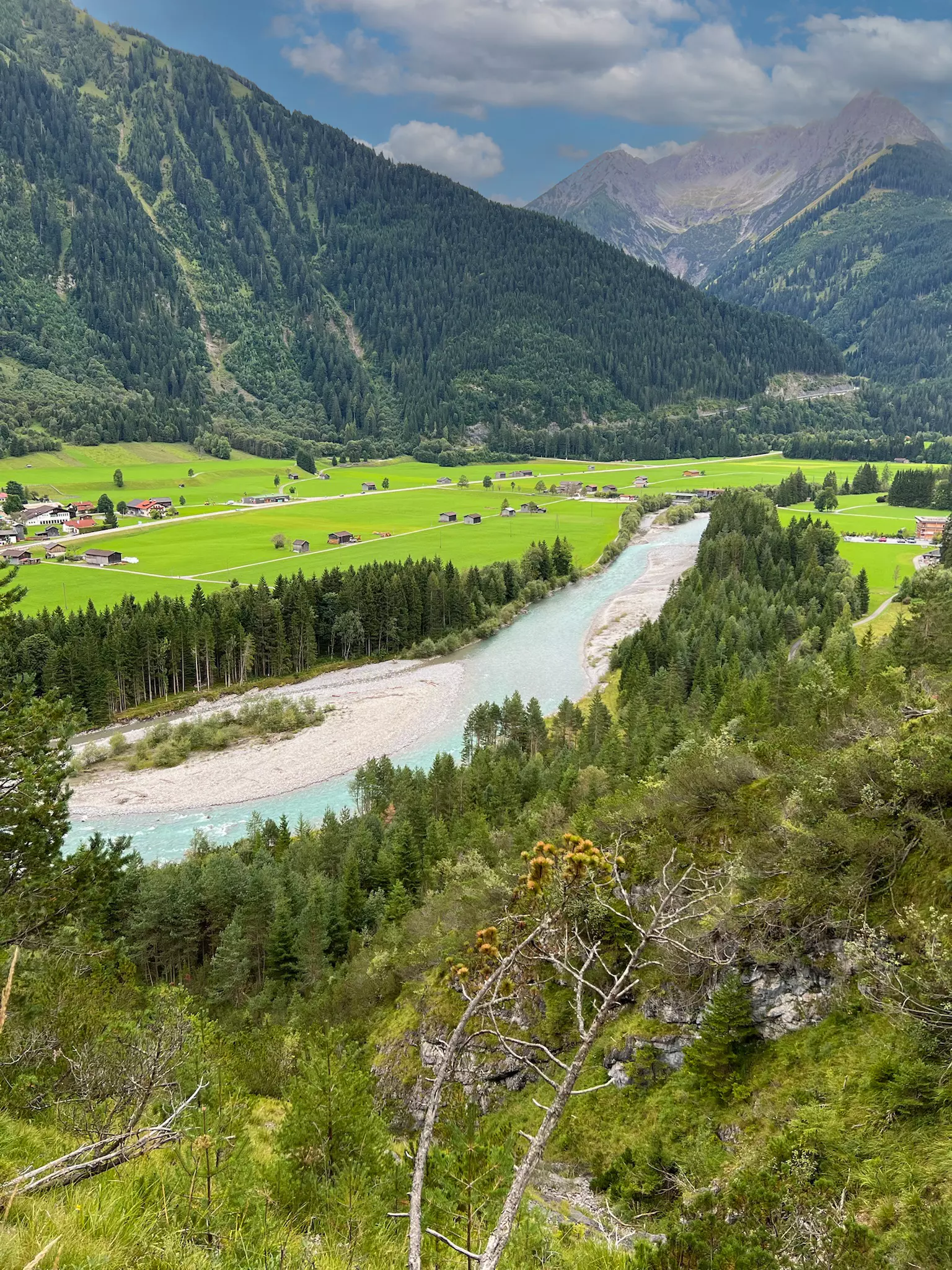
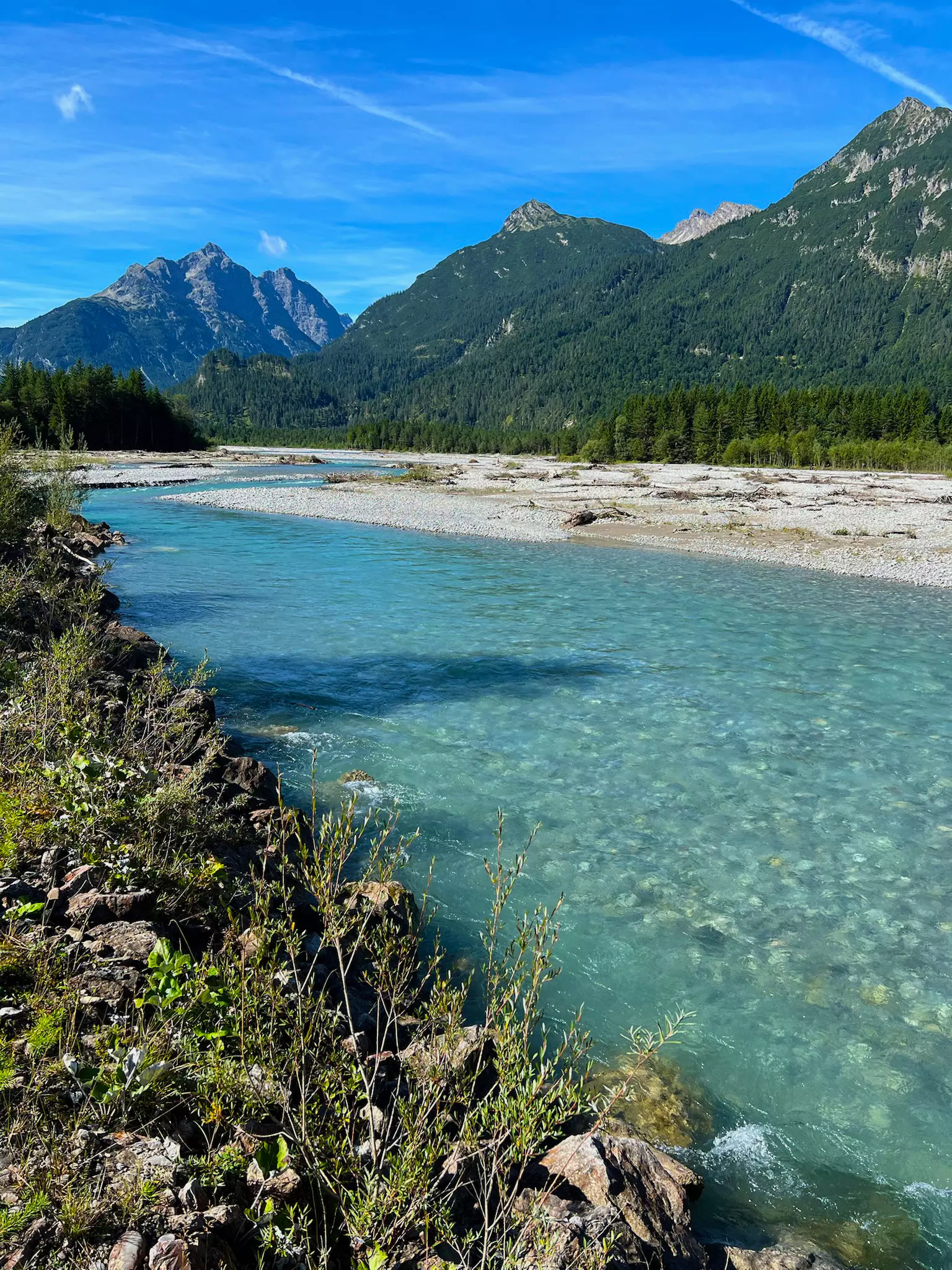
From Elmen, the Lechweg leads out of the valley, past colorful meadows, wide gravel areas, and the characteristic river bends of the wild river. Shortly before Vorderhornbach, you encounter one of the rare beech mixed forests in the Lech Valley. On the left, a short climb to the former mountain station of the Vorderhornbach ski lift is necessary: from there, a magnificent panoramic view opens up over the Lech Valley with a view of the village, the surrounding peaks, and the widely branched "Lechzopf" (braided riverbed) that winds like silver through the valley.
The trail then descends on a path into the village of Vorderhornbach, which is also referred to as the "little Merano of the Lech Valley" due to its mild climate. The "Badino" natural adventure pool with chlorine-free water, diving rocks, and a Tarzan rope offers a welcome refreshment. Ideal for a summer break or a small snack at the Bistro Badino Almwiesengaudi. From Vorderhornbach, the path leads along a country lane to the Lech bridge, where you cross the river and continue hiking along the bank to Stanzach. Shortly before the bridge, a path branches off to the left up to the Baichlstein. After around 45 minutes, you reach a magnificent viewpoint with a view of Vorderhornbach and the wildly branched Lech. The impressive landscape formation is due to old groynes (buhnen) that were previously used to reinforce the banks.
In Stanzach itself, a visit to the St. Michael parish churchis worthwhile. It was built in 1660, rebuilt after a fire in 1774, and designed in the Nazarene style. The high altar painting is by the Reutte painter Johann Jakob Zeiler.
Out of the valley, the Lechweg continues through an open wild river landscape, which invites you to rest with its wide gravel banks and driftwood logs. Here you can pause, build a cairn (Steinmännchen), or enjoy your packed lunch at one of the designated barbecue areas. Ornithologists will find ideal conditions in this section: the gravel and riparian areas are habitats for rare species such as the little ringed plover and the common sandpiper. From July to September, guided excursions with nature park guides are offered every Tuesday morning from 9 AM. Learn even more about the Tiroler Lech Nature Park from the Nature Park Association .
The path continues towards Forchach, where a short detour to the impressive Forchach suspension bridge is recommended on the left. The Lechweg itself does not run across the bridge, but you walk past it, and a short crossing is worthwhile: the elegant cable construction spans the river and offers a unique view into the wide Lech riverbed.
From Forchach, follow the Lech riverside path further to the Johannesbrücke. The first bridge over the Lech was built here as early as the mid-19th century. At that time, users still had to pay a toll to cross it. Today, the modernized bridge is a reminder of this early traffic connection through the valley.
In the further course, the hiking trail leads past the Forchach bathing lake (Baggersee). Barbecue areas invite you to a cozy rest here before you cross the regional road (Landesstraße). Now the path moves slightly away from the river and leads along the foot of the Moosberg hill in the direction of Weißenbach am Lech.
On the outskirts of the village, you will find an idyllic Kneipp facility that revitalizes tired feet and legs. A soothing conclusion to this stage. The Moosberg itself is an ecologically particularly valuable area: a finely tuned mosaic of dry and humid habitats offers ideal conditions for rare ground-breeding bird species such as the whinchat or the skylark. Grazing by sheep keeps this cultural landscape open and rich in species, a beautiful example of how traditional alpine farming and nature conservation harmonize in the Lech Valley.
Thus, this varied hiking stage ends in Weißenbach am Lech, a place where nature experience, tranquility, and living tradition combine in a special way.
Hotel (example): Naturparkhotel Florence
distance
climb
descent
duration
From Weißenbach am Lech to Pflach
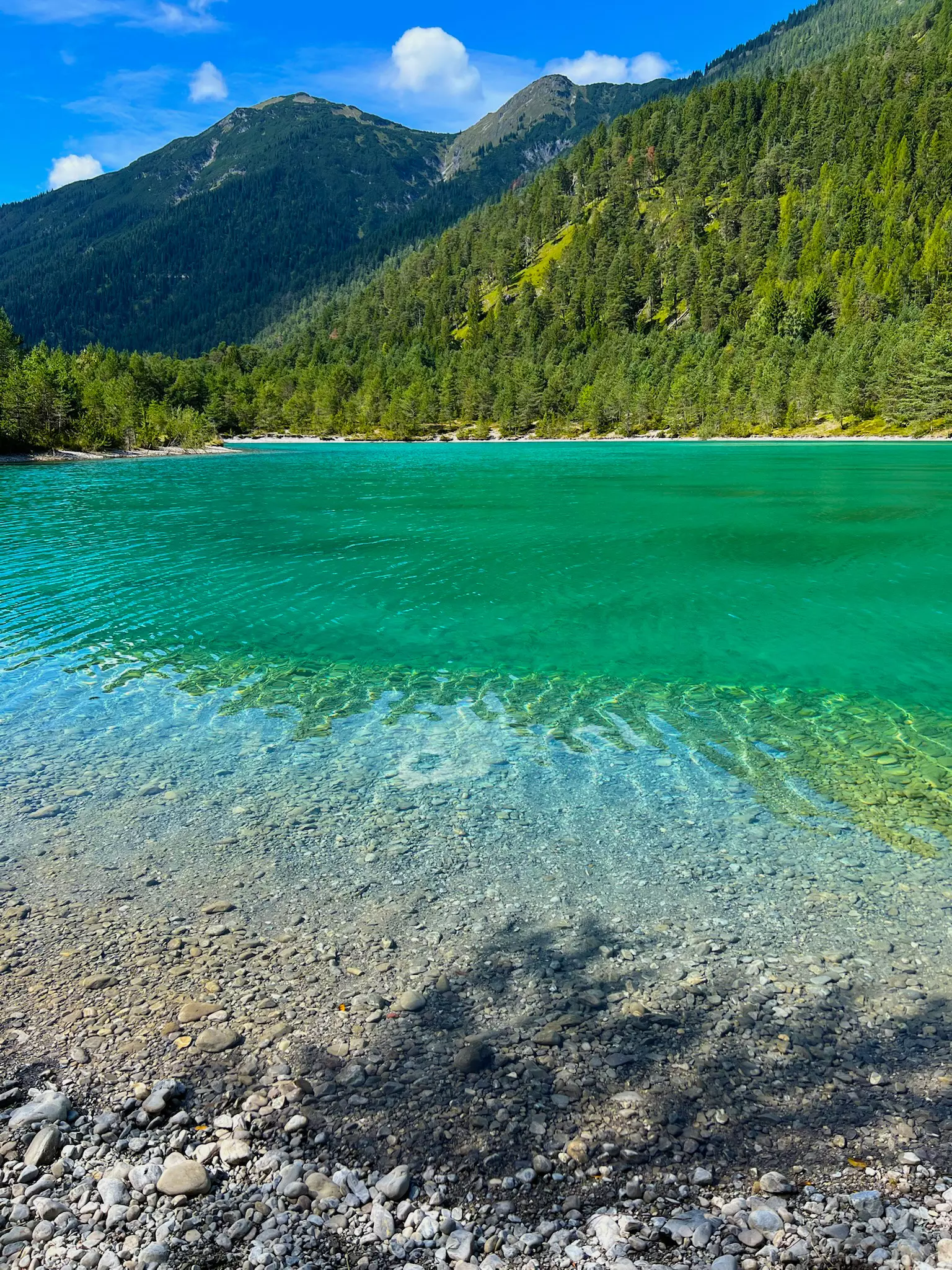
From the town center of Weißenbach am Lech, the Lechweg leads back to the river and continues to the impressive exit of the Rotlech Gorge. The steep rock faces and the rushing water create a particularly striking natural backdrop here. The path then continues to Rieden, where the quietly located Lake Rieden presents a truly idyllic jewel. Embedded in green meadows and surrounded by wooded slopes, it offers a wonderful spot for a first short break. Further along the stage, you pass the Hornberg sediment trap. Here, the scree, the so-called alluvial gravel of the Lech, is deposited in a controlled manner. This is an important measure for flood protection in the region.
You cross the Lech footbridge to Höfen, picturesquely situated at the foot of the Hahnenkamm mountain. From here, the Reuttener Seilbahnen (cable cars) provide access to the surrounding mountain world in summer and winter. A worthwhile destination for all those who would like to experience the Lech Valley from above. With the Lechtal Aktiv Card, you receive a 50% discount on the Hahnenkammbahn. From Wängle, the Lechweg initially follows the sunny high-altitude panoramic path. A well-signposted trail leads you up to the Costarieskapellechapel. The short and strenuous ascent is worth it, as it opens up an impressive panoramic view over the Reutte basin and the surrounding mountains. If you are not so good on your feet, you can turn off beforehand directly to Lake Frauensee. Despite its small size (circa 150 x 120 meters), Lake Frauensee has its own quiet atmosphere. The Frauenseestube inn directly on the shore invites you for a cozy stop. A wonderful place to pause and enjoy regional specialties. Don't forget to pack swimwear and a towel.
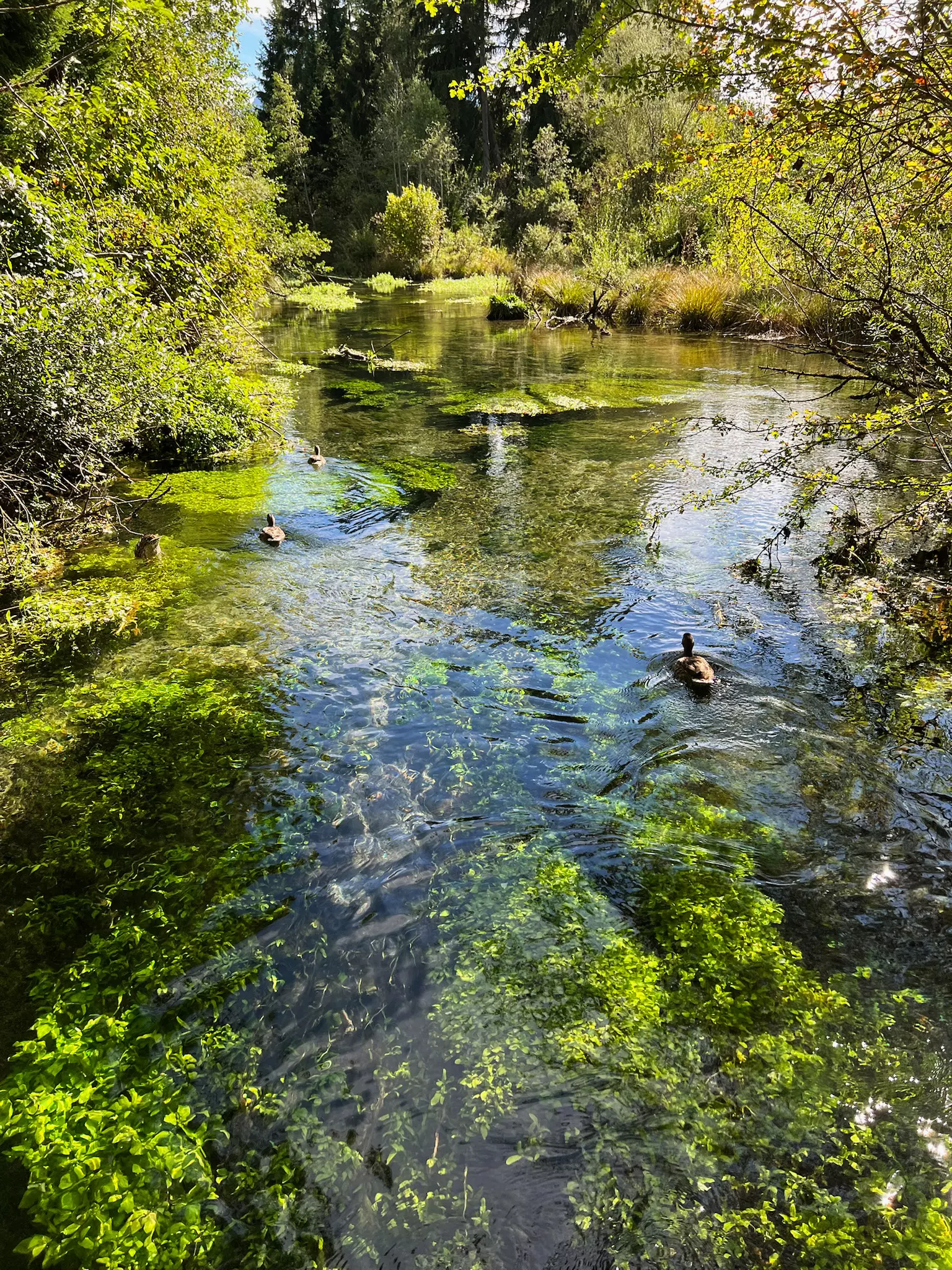
The path then leads down to Hinterbichl, where you cross the Lech via a footbridge and continue hiking through the Pflacher Au (riparian forest). This area is known for its extraordinary bird diversity. The extensive gravel banks and riparian forests offer a protected habitat for numerous, sometimes rare, species. There is also a bird watching tower near the innovation center. An ideal vantage point to spot grey herons, kingfishers, or common sandpipers with a little luck. The bird adventure trailalso begins here, offering exciting insights into the nature of this special habitat.
The stage finally continues to Pflach, the destination of this day's hike.
Hotel (example): Hotel Gasthof Zum Schwanen

distance
climb
descent
duration
9. Tag
From Pflach to Füssen and the Lechfall
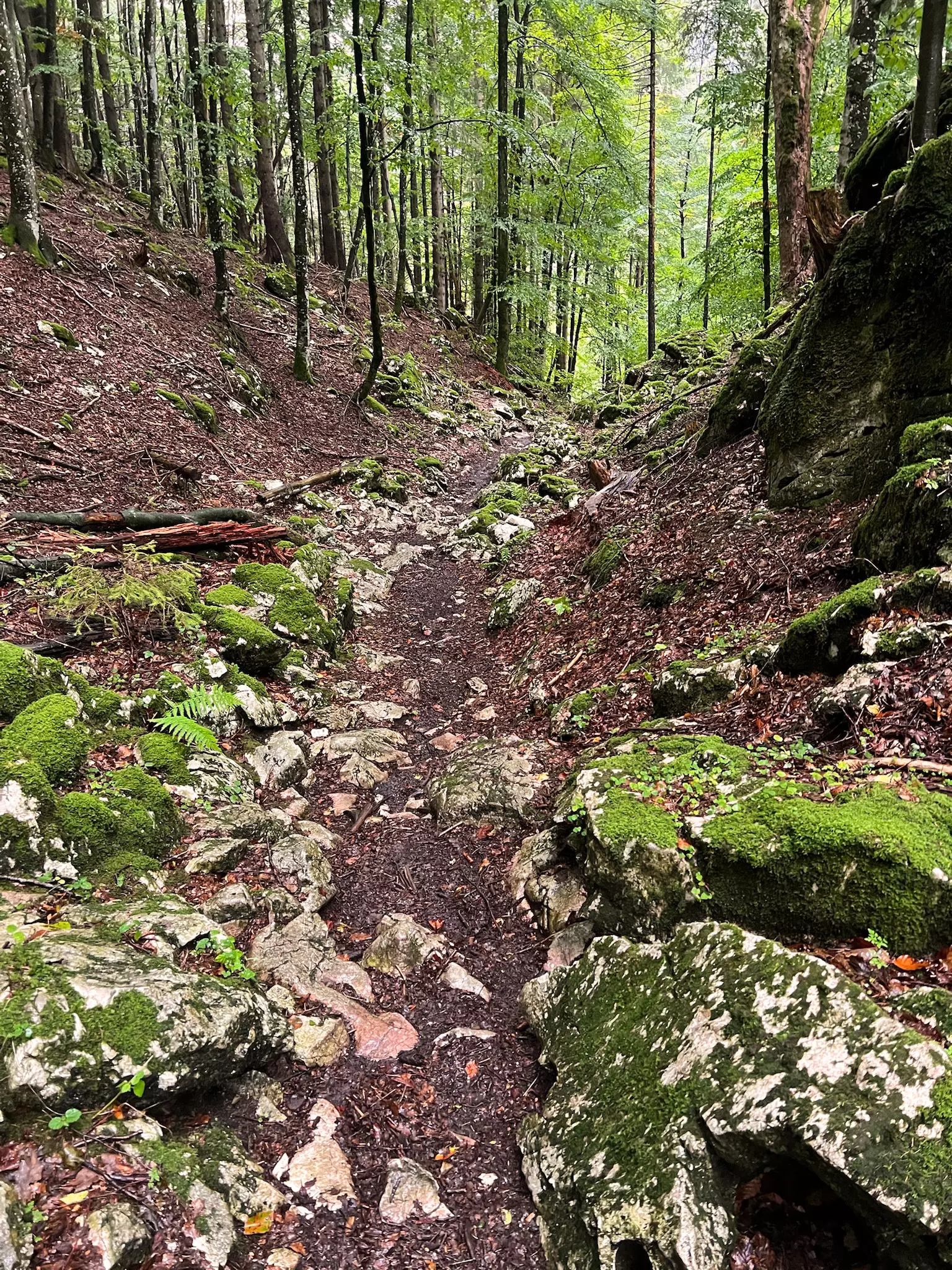
On the last stage of the Lechweg, you leave the river for now and follow pleasant forest and woodland paths uphill over the Kniepass to the Sternschanze (Star Sconce). This historic complex is part of the Ehrenberg Castle World and once served as an advanced fortress. An impressive panoramic view down onto Oberpinswang awaits you here, a first taste of the scenic highlights of this stage.
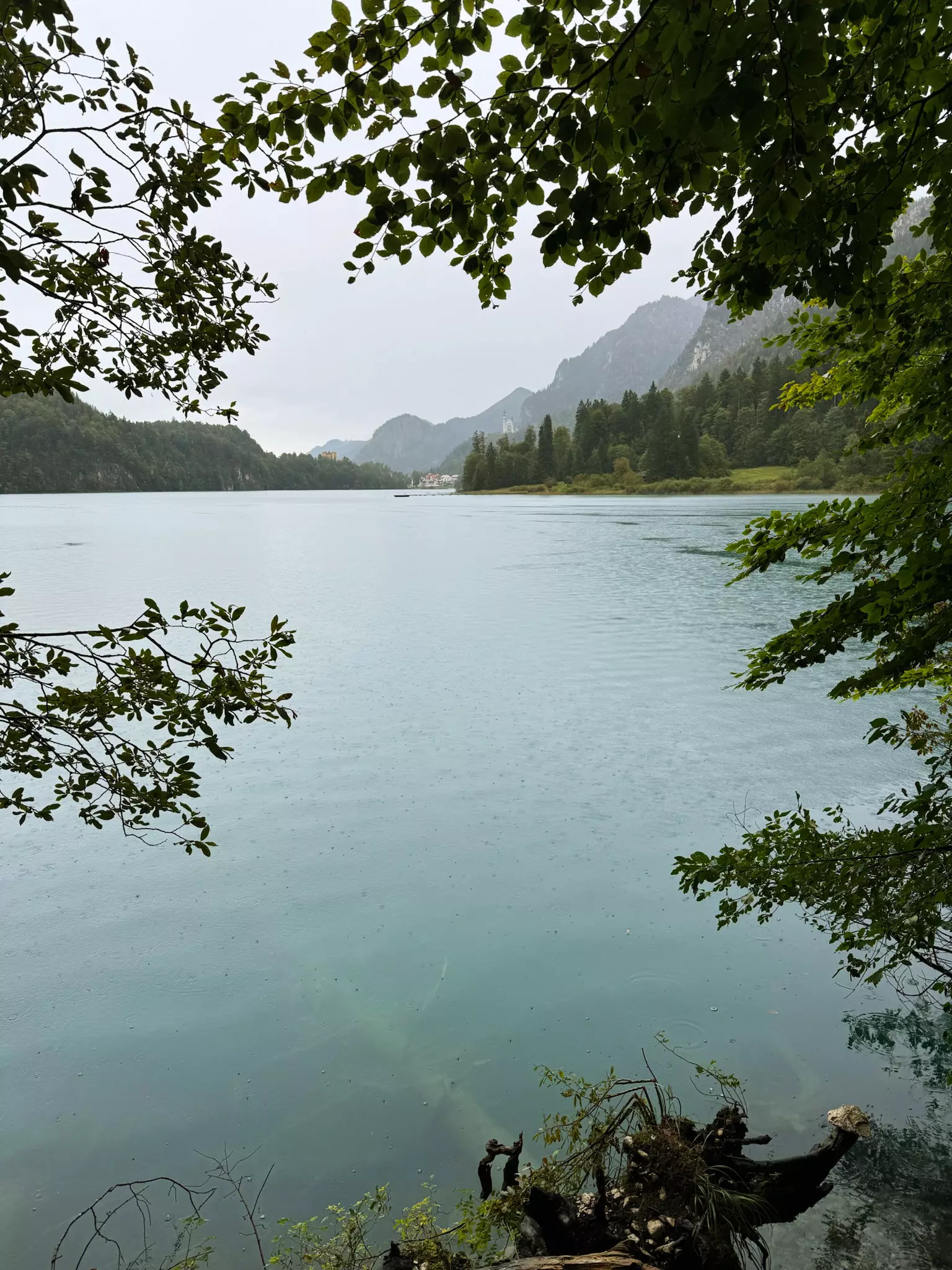
Near Unterpinswang, you have the opportunity to walk in the footsteps of King Ludwig II. The monarch was always fond of staying here. If you follow this historic turn-off, you leave the official Lechweg and reach the famous Fürstenstraße (Princes' Road) via the Schluxen, which leads you back to the Lechweg a little later. The hike then continues along idyllic forest and woodland paths towards the Alpsee lake and thus across the border into the Allgäu region in Bavaria. The glittering water of the lake already announces itself in the treetops, while on your way you pass the striking rock formation "Israelit," a long, slightly overhanging rock face that has impressed hikers for centuries.
A beautiful view of the Alpsee soon opens up between the tree trunks, and shortly afterwards, the most famous landmarks of this region present themselves: Hohenschwangau Castle and Neuschwanstein Castle. Follow the Alpsee circular trail to the Marienmonument (Marian Monument), which invites you for a short, contemplative break. The path continues above the Schwansee lake via the Alpenrosenweg trail up to the Kalvarienberg (Calvary Hill)—the last, somewhat steeper ascent of the Lechweg. Once at the top, you are richly rewarded: the clear view opens up wide over the rooftops of Füssen, into the lake district of the Alpine foothills, back to the royal castles, and into the Tyrolean mountains. From here begins the final descent through forest and along gentle paths until you finally reach the rushing water of the Lechfall , the official end point of the Lechweg. Between the gorge and the emerald-green wild river, an exceptionally varied long-distance hike that combines alpine nature, cultural treasures, and unforgettable views ends here.
Hotel (example): Hotel Sonne


distance
climb
descent
duration
10. Tag
Departure or extension
After eventful hiking days along the Lech river, it's time today to say goodbye or continue the journey a little further. If you have enough time, enjoy the charming old town of Füssen one more time, stroll through the winding alleys, or visit the famous royal castles of Neuschwanstein and Hohenschwangau—a fitting conclusion to your hike.
Should you want to experience the special atmosphere by the river for longer, there is the option to continue your route on the Lech Adventure Trail (Lech-Erlebnisweg) all the way to Landsberg am Lech. Alternatively, the King Ludwig Trail (König-Ludwig-Weg) invites you on a cultural-historical extension to Starnberg. Hike in the footsteps of the Bavarian fairytale king through dreamlike pre-alpine landscapes.
No matter what you decide, the Lech and its stories will surely accompany you further in your thoughts for a while.